Secret Council Property Dealings Cost Cheltenham Its Affordable Housing And Create An Eyesore.
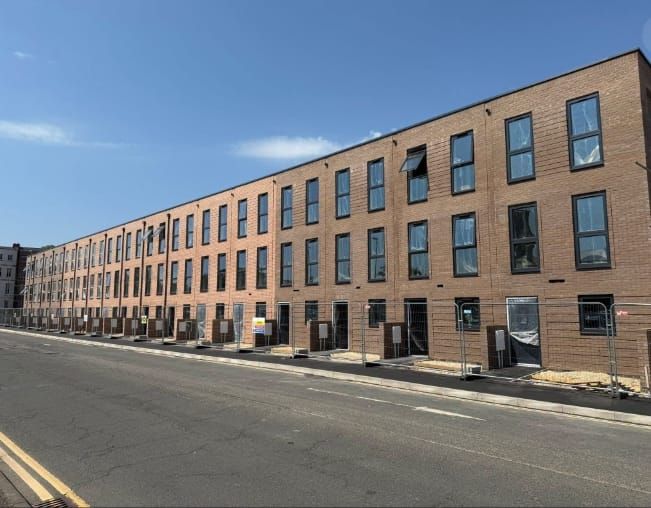
- The housing crisis is systematically exacerbated when local authorities prioritise immediate capital extraction over long term social infrastructure.
- Cheltenham Borough Council structured the disposal of North Place car park to generate a substantial sale price
- A Veil of secrecy in the shape of commercial confidentiality clauses mean the final negotiated land price remains withheld from public view.
- The high baseline land cost gave the developer cover to legally reduce affordable housing provision.
- Cost cutting has also resulted in a low budget aesthetic that local critics have heavily criticised.
- The result is a council profiting from a broken housing market the impacts all residents in Cheltenham.
- Tenants have fewer options and face higher rents.
- First time buyers are cornered into a lifetime of debt for a basic home.
- Household disposable incomes are squeezed leaving less to be spent on the beleaguered High Street and Cheltenham small businesses.
Too Long; Didn't Read (TL;DR)
The transformation of Cheltenham’s North Place car park into the Arkle Court development is a striking demonstration of how municipal policy priorities can compromise civic outcomes. Rather than securing a maximum quota of genuinely affordable housing or guaranteed architectural excellence, Cheltenham Borough Council structured the asset sale to generate substantial capital receipts to support its broader corporate financial strategies. To protect the viability of the project against this high baseline land cost, the developers utilised standard statutory financial viability provisions to legally reduce affordable housing targets and value engineer the architecture. The result is a commercially confidential transaction that has substituted a public asset for a private development with heavily reduced social housing obligations, leaving the town with a controversial design that the Cheltenham Civic Society has openly compared to a Soviet era prison block.
The Article
Welcome to modern local governance, a world where your elected representatives frequently operate under intense budgetary pressures, managing public assets with the focus of corporate estate agents working to balance a spreadsheet. If you want to see the exact moment that structural financial strategies overrode the delivery of local social infrastructure, you only need to look at a patch of tarmac formerly known as the North Place car park, which is currently rising from the earth as Arkle Court.
For years, we have been fed the comforting bedtime story that councils are entirely helpless victims of the housing market, watching from the sidelines as external global forces drive up prices. It is a comforting fiction, but it is fundamentally inaccurate.
The reality is that Cheltenham Borough Council did not just witness the reduction of affordable housing at North Place. They established the very commercial parameters that made it inevitable. The council sat at the negotiating table with a corporate developer and executed a deal structured to generate significant upfront capital. This strategy was deployed because the council requires substantial capital receipts to support its wider financial management plans and corporate funding goals.
The Shield of Commercial Confidentiality
To ensure that ordinary residents cannot easily interrogate the trade offs inherent in this transaction, the council utilised standard bureaucratic confidentiality protocols. The exact multi million pound figure that changed hands remains a restricted item, locked away under commercial exemption rules.
You do not need to see the specific numbers to understand the economic chain reaction. The mathematics of property development are entirely predictable. If a council demands a premium price for land to support its internal balance sheets, that cost must be absorbed elsewhere within the scheme. Corporate profit margins are effectively fixed by the financial institutions funding the project, usually benchmarked at fifteen to twenty percent.
Therefore, a developer facing an inflated land cost has very limited levers to pull. They must either reduce the cost of the physical structures or reduce their contributions to the community.
At Arkle Court, both compromises occurred. The council’s official planning policy targets a baseline of 35 percent affordable housing for major residential schemes. However, because the negotiated land baseline was set so high, the developer was able to successfully deploy the statutory Financial Viability Assessment framework. Under national planning rules, they legally demonstrated that fulfilling the full quota would render the project unviable. The council accepted a significantly reduced provision, consisting of nineteen discounted First Homes apartments, which represents a major drop from the original policy target.
The Aesthetic Cost of Value Engineering
The final consequence is the physical design of the development itself. When a project is heavily weighted by high initial land costs, the construction budget is frequently subjected to intense value engineering, which limits architectural ambition and material variance.
The Cheltenham Civic Society publicly intervened to criticise the resulting design, arguing that it fails to respect the historic sensitivity of the adjacent Central Conservation Area. In a highly critical review, the society stated that the uniform blocks resembled a Soviet era prison block rather than a high quality addition to a historic Regency town. Wavensmere Homes has defended the project, stating that the street scene is incomplete and that the design is intended to complement the area safely, but the visual tension remains obvious.
This is the invisible tax of municipal land disposal strategies. The council secures a one off capital injection to smooth over its structural financial pressures, the developer protects its required profit margin, and the residents of Cheltenham inherit a permanent loss of potential social housing alongside a heavily contested architectural addition to their town.
This is exactly why Cheltenham Tenant Union is organising Cheltenham Tenant Power. We need to challenge the commercialised culture within our local authority and demand an administration that explicitly prioritises renters, first time buyers, mortgage holders, and struggling high street businesses. It is time to stop treating public land as a short term liquidity mechanism and start treating it as a permanent civic foundation.
In-Depth Hierarchical Summary of the Arkle Court Case Study
- I. The North Place Car Park Asset Disposal Strategy
- A. The Institutional Motivation for the Sale
- Cheltenham Borough Council utilised a prime public asset as a short term capital generation mechanism.
- The primary objective of the negotiation was to secure significant capital receipts to support broader corporate financial strategies.
- B. The Application of Confidentiality Frameworks
- The final land sale price and exact transaction yields were classified under standard commercial confidentiality rules.
- The restricted status of the data prevents public analysis from directly tracking the trade offs between land receipts and civic infrastructure.
- A. The Institutional Motivation for the Sale
- II. The Capital Extraction Chain Reaction
- A. The Mechanics of Residual Land Valuation
- High negotiated land values directly compressed the remaining capital available for construction and section 106 obligations.
- Fixed developer profit margins guaranteed by lenders forced cost cutting measures onto the build quality and social allocations.
- B. The Reduction of the Affordable Housing Quota
- Local planning policy mandates a baseline target of 35% affordable housing for major residential schemes in Cheltenham.
- The developer successfully utilised statutory Financial Viability Assessments under national policy to prove the 35% target was unviable due to land costs.
- The council accepted a reduced provision of 19 First Homes apartments, representing roughly 13% of the total units.
- A. The Mechanics of Residual Land Valuation
- III. The Architectural and Civic Consequences
- A. Value Engineering of the Public Realm
- High initial land overheads limited the budget available for architectural variance, material quality, and contextual integration.
- The development has drawn sharp criticism for its lack of structural harmony with the adjacent Grade II* listed St Margaret’s Terrace.
- B. Public Critique by Civic Authorities
- The Cheltenham Civic Society formally designated the emerging scheme as aggressively mediocre.
- Official public statements from the society compared the architectural aesthetic to a Soviet era prison block.
- The developer, Wavensmere Homes, maintains that the completed street scene will safely enhance the conservation area.
- A. Value Engineering of the Public Realm
- IV. The Core Mandate for Cheltenham Tenant Power
- A. Challenging Local Government Disposals
- Document the relationship between municipal asset sales and the reduction of local planning obligations.
- Campaign for total transparency and the end of exempt status for transactions involving public land parcels.
- B. Rebuilding the Local Economy
- Protect the disposable income of local residents from being consumed by housing costs driven by high land valuations.
- Retain consumer capital within the town to support independent high street businesses currently facing extreme economic pressure.
- A. Challenging Local Government Disposals
Verified Sources for Data and Statistics
- Arkle Court Planning Allocations & First Homes (13% vs 35%): Cheltenham Borough Council Planning Portal, North Place Car Park Development Variation Report / Wavensmere Homes Viability Assessment Approval.
- Cheltenham Civic Society Design Criticism ("Soviet era prison block"): Cheltenham Civic Society Public Statements / Gloucestershire Live News Reports ("Civic Society slams 'mediocre' North Place design", published mid 24/25 tracking).
- UK Rental Affordability Benchmarks (41% baseline): Canopy Rental Affordability Annual Report (Published January 2026).
- Council Joint Venture Protocols: Cheltenham Borough Council Strategic Asset Management Plan and Corporate Financial Strategy reports.